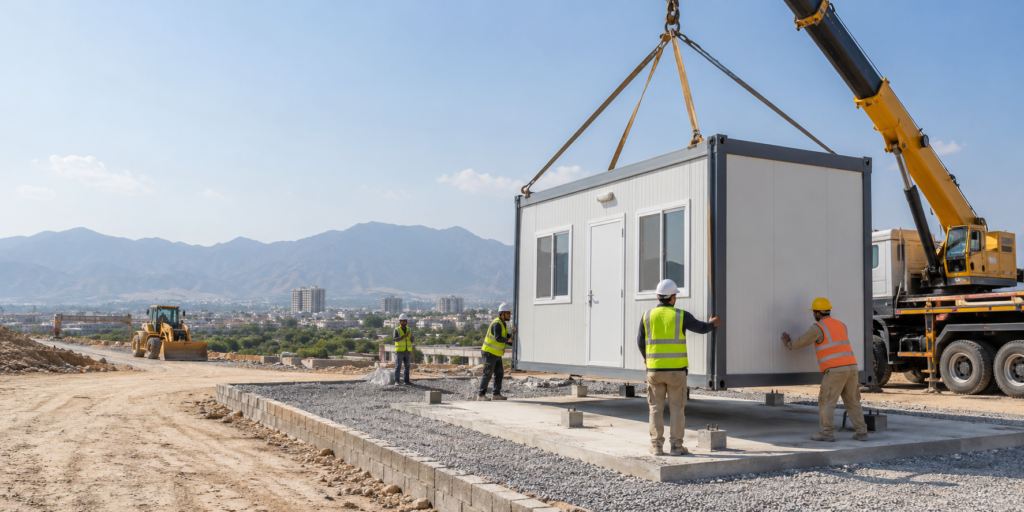

Ordering a portable cabin is only one part of getting a useful workspace on site. The delivery day determines whether the unit reaches its final position smoothly, whether the entrance faces the right way and whether the project team can start using it without unnecessary rearrangement. For contractors, developers, factories and housing-society teams, porta cabin delivery Pakistan should be planned before dispatch—not solved after the truck arrives at the gate.
Pakistan projects can have very different access conditions. A level industrial yard, a congested city plot, a remote worksite and a developing housing scheme each create their own questions about approach routes, ground condition, offloading, power and day-one access. A simple pre-delivery checklist helps everyone coordinate the practical details early.
This guide covers what a buyer or site representative should confirm before a porta cabin, office container, security cabin or similar modular unit is delivered. It does not replace a site-specific transport, lifting or electrical plan. Instead, it gives you the questions that make a supplier discussion more useful and help your project team prepare responsibly.
What Does Porta Cabin Delivery Include?
Delivery is more than transport from a fabrication yard to a map pin. Depending on the agreed scope and the unit type, the process can involve dispatch planning, route checks, site approach, offloading coordination, final positioning and handover. The exact responsibilities should be clear in the quotation or order discussion so there is no assumption that a task is included when it is not.
Before confirming the delivery date, make sure you understand:
- the agreed delivery address and the named site contact;
- the unit’s final intended position, not just the main gate;
- who will prepare the supporting surface or base;
- what equipment or coordination is required for offloading and placement;
- how access restrictions, weather or other site activity will be communicated; and
- what is expected during handover, including a visual condition check.
ARCT’s logistics and transport service is relevant when a modular unit needs coordinated movement as part of a wider project plan. If you are still choosing between units, the office container service page explains one of the common formats used for site and project offices.
Confirm the Final Position Before Dispatch
A common mistake is to prepare a general area but not decide where the cabin will actually sit. The final position affects door direction, window outlook, power routing, drainage around the unit, walking access and the space available for any lifting or placement activity. Mark the intended position with the site team before delivery planning is finalised.
When identifying the position, consider the day-to-day job of the cabin. A site office should be close enough to the work to be useful, yet outside the path of active vehicles and deliveries. A security cabin should support controlled entry. A sales office needs a clear visitor approach. A storage unit should not block access to equipment or emergency routes.
Plan Around the Site, Not Just the Available Empty Space
Think through pedestrian movement, vehicles, material laydown areas, gates and future construction stages. A location that is convenient this week may become obstructed after excavation, scaffolding, temporary works or material storage changes. For a broader way to arrange office, security, storage and welfare facilities, use ARCT’s site office layout guide for Pakistan.
Check the Delivery Route and Site Entry
The route into a site can be more important than the straight-line distance to the city. Before the delivery day, walk or review the approach from the nearest main road to the final position. Look for narrow turns, low overhead obstacles, weak shoulders, soft ground, parked vehicles, temporary barriers, gates and areas where other work may restrict movement.
Share practical access information early. A site photograph, short video or annotated map can make a discussion far clearer than a written address alone. If the access route changes because of rain, excavations, roadwork or a new gate arrangement, tell the delivery coordinator as soon as possible rather than waiting until the vehicle is already moving.
Prepare a Stable, Usable Placement Area
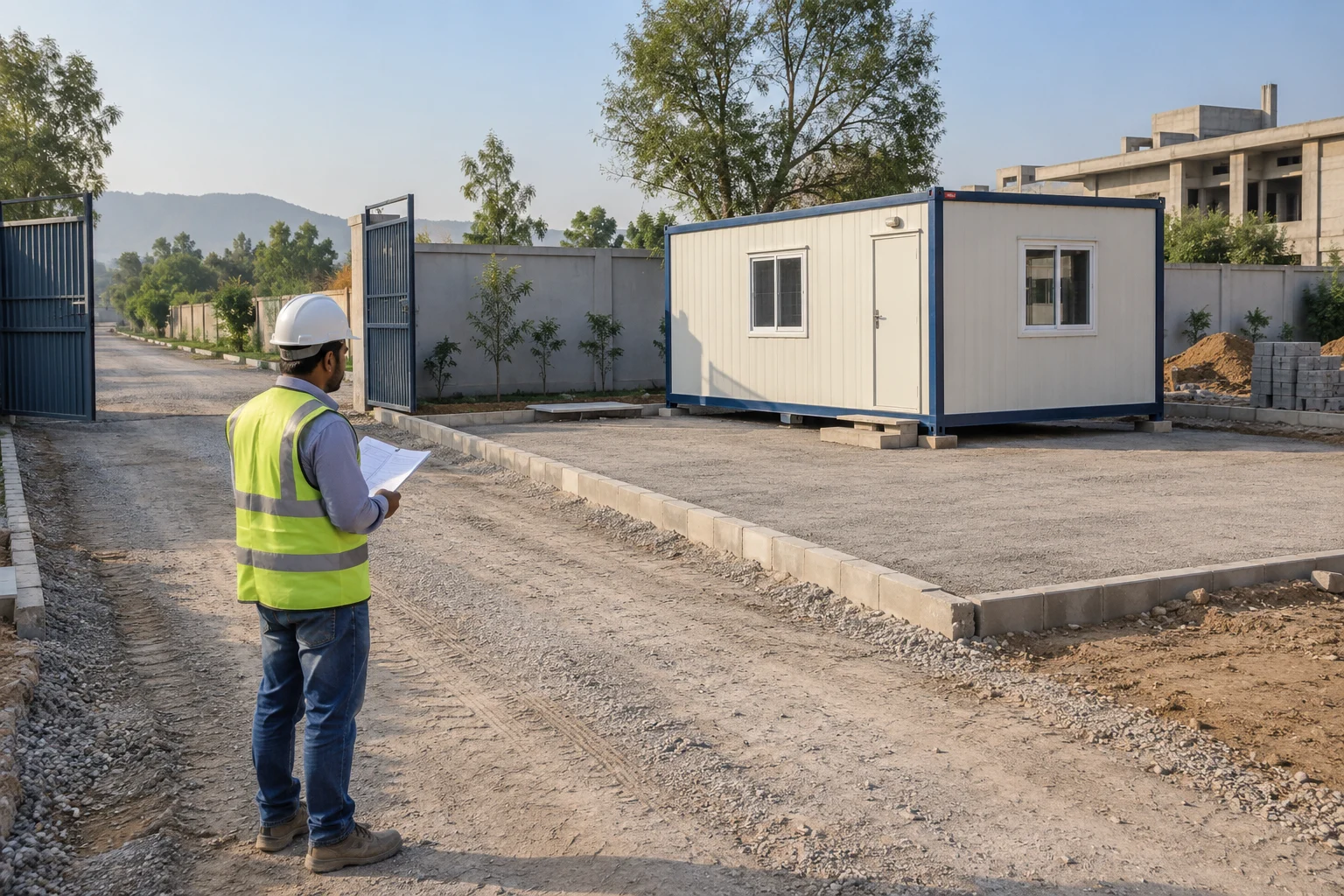
The supporting area needs to suit the cabin, the site conditions and the agreed installation approach. It should be planned before dispatch, not improvised while the unit is waiting at the gate. The responsible project team should confirm that the final area is level enough for the intended position, accessible for placement and clear of standing water or loose material that could interfere with safe work.
Where a base, blocks, pads or another support solution is required, confirm the preferred approach with the supplier and the responsible project or civil team. Do not rely on a generic online detail for a site-specific decision. Ground condition, cabin configuration, local drainage and the intended period of use can all influence the right preparation.
Think About Drainage and Future Site Conditions
On construction sites, ground conditions can change rapidly. Plan for water to move away from the cabin rather than collect near doors or under the floor. Also consider whether upcoming excavation, vehicle movement or temporary works will affect the access path or the supporting area. A good placement decision protects usability long after the delivery truck has left.
Coordinate Offloading and Placement Early
Offloading should be discussed as a coordinated site activity. The exact method and equipment depend on the unit, the access, the agreed scope and local conditions. Confirm who is responsible for arranging the necessary equipment, who will control access to the immediate work area and who can make decisions on site if conditions are different from what was expected.
Keep the intended placement area free of unauthorised people, loose materials and unnecessary vehicles. Make sure the nominated site contact can be reached on the day. If there are overhead services, buried services, nearby structures or restricted hours, flag them before dispatch so the relevant teams can evaluate the plan.
The right question is not “can we fit it in somehow?” It is “has the final placement been planned so the unit can be received and used safely?” If your project is assembling several modular elements, ARCT’s construction site setup checklist can help put the delivery task in the context of the complete temporary site setup.
Plan Utilities Before the Cabin Arrives
A cabin may be physically in place but not ready for work until power, data, water or sanitation needs have been coordinated. Decide early what the unit requires and where those connections can reach it. A site office may need lighting, sockets, cooling, internet and CCTV routes. A washroom cabin needs a different discussion about water and drainage. A security cabin may need lighting and communication arrangements.
Prepare a short utility list for the project team and supplier:
- planned power source and the route to the cabin;
- expected electrical loads and the equipment to be used;
- internet, data or CCTV requirements;
- water and drainage needs if applicable; and
- who will review and complete the site-side connections.
For an office that needs partitions, furniture and service points planned before delivery, see the guide to office container customization in Pakistan. This helps prevent the common problem of choosing an interior layout without considering where power and access need to go.
Use a Delivery-Day Handover Checklist
A short handover check gives both sides a clear record of what was received. The purpose is not to create paperwork for its own sake; it is to confirm the cabin has reached the agreed location and to identify anything that needs attention while the relevant people are available.
A useful check can include:
- the correct unit and agreed position;
- visible exterior condition, doors and windows;
- reasonable level and stability at the installed location;
- access around the entrance and any steps or landing arrangement;
- agreed interior items or fittings that can be checked at handover; and
- any outstanding site-side utility work or follow-up items.
Take clear photographs of the placement and note any concerns promptly. If the cabin is being used as a site office, storage area or welfare unit, tell the relevant team when it is ready for occupancy and when outstanding connections are complete.
Keep Communication Clear on Delivery Day
Even a well-prepared site can change overnight. Rain can affect the route, a delivery vehicle can be delayed at an entry point, another contractor can occupy the turning area or a site supervisor can be moved to another work front. A short confirmation call before dispatch is a simple way to check that the access route, final position and named contact are still correct.
The nominated site contact should be able to reach the receiving area, understand the intended position and tell the delivery team about any immediate changes. Give that person the relevant order reference, the supplier’s coordination contact and a clear description of the unit. If your site has security procedures or specific delivery hours, communicate those details before the vehicle arrives.
It is also sensible to agree what will happen if conditions are unsuitable on the day. The right response depends on the agreed delivery scope and site situation, but a clear escalation route helps everyone avoid rushed decisions. Do not ask a driver or site worker to make a technical placement judgement alone. Pause, share the issue with the responsible parties and agree a workable next step. Calm communication protects the project schedule far better than trying to force a placement through an unprepared site.
Delivery Planning by Use Case
Different units create different preparation priorities. A small security cabin may need careful gate-side placement and electrical access. A larger office container may need a more deliberate layout, visitor approach and utility plan. A storage container needs practical vehicle access without interfering with work zones. A portable washroom needs attention to sanitation and drainage arrangements.
For a planned office delivery, use the requirements in ARCT’s office container buyer guide alongside this checklist. For a price discussion, the porta cabin price guide explains why the final specification and delivery location should be clear before comparing options.
What to Send With Your Delivery Enquiry
A well-prepared enquiry can reduce back-and-forth and helps the supplier understand the actual conditions. Along with the type and size of unit, send the delivery city, full location, site contact, proposed position, access information and any relevant site photographs. Tell the team if there are limited delivery hours, a narrow entry, soft ground, utility crossings or other constraints.
AL Rehmat Container Terminal supplies modular units and supports delivery planning across Pakistan from its Lahore base. When your site details are ready, use the ARCT contact page to share the project requirements and discuss the appropriate next step.
Conclusion
Successful porta cabin delivery is a coordination task: choose the right position, prepare access and the support area, clarify placement responsibilities, plan connections and complete a simple handover check. These steps are practical, but they can make the difference between a cabin that is merely delivered and one that becomes a usable part of the project without avoidable disruption.
Frequently Asked Questions
Confirm the final location, site approach, gate access, ground preparation, offloading coordination, named site contact and any power, water or data requirements. Share photographs or a simple site plan where they help explain the conditions.
The agreed responsibilities should be clear before dispatch. The project team commonly prepares the access and final area, while the supplier and site team coordinate the delivery and placement scope that has been agreed for the unit.
Yes. Identify required power, cooling, data, water, drainage and security connections before the cabin arrives. This helps the site team prepare the required routes and avoids treating a delivered cabin as a finished workplace before it is connected.
Many modular units can be relocated, but a move still needs planning for access, disconnection of services, equipment coordination and the new placement area. Discuss the intended future use with the supplier when you first request the cabin.
Provide the unit type, delivery city, complete location, proposed final position, access details, delivery timing, site contact and any restrictions such as gate size, route constraints, overhead obstacles or limited working hours.