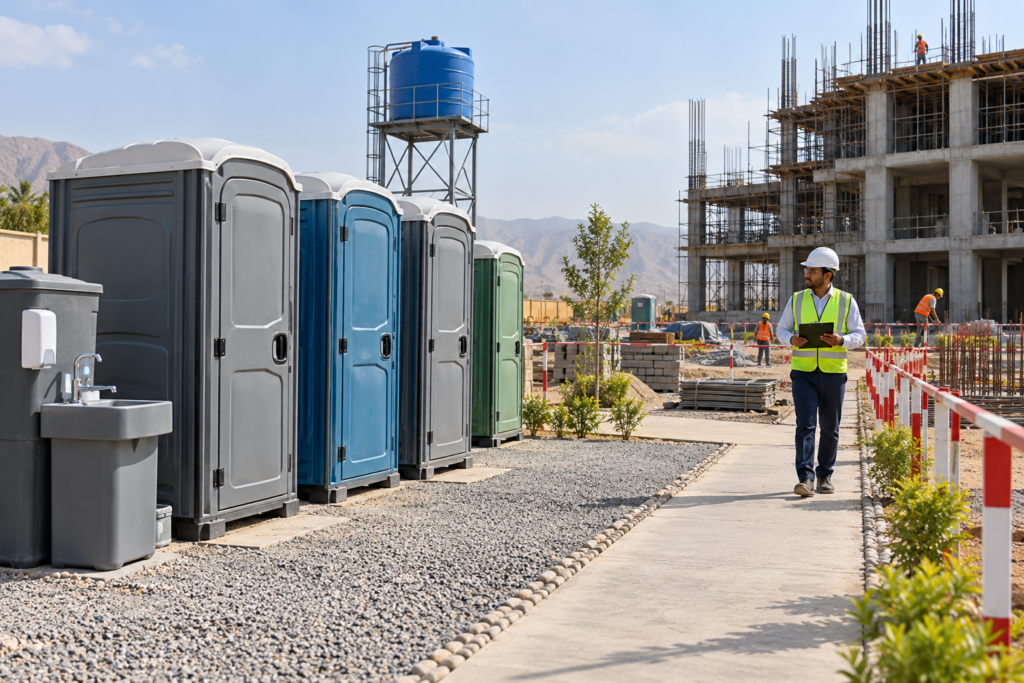

Temporary sanitation is easy to overlook until a project site or outdoor gathering needs it immediately. A practical portable toilet rental Pakistan plan gives workers, visitors and guests a cleaner, more usable facility while permanent washrooms are unavailable, incomplete or too far from the activity.
Construction managers, event organisers, factory teams and housing-society administrators all face the same basic question: what type of temporary washroom arrangement suits the site, where should it go, and what must be agreed before it is delivered? The right answer depends on the duration, location, expected use, access and the services available around the unit.
This guide helps you prepare a clear enquiry and avoid treating the washroom as a last-minute item. It does not prescribe a universal unit count or service schedule. Those details should be discussed with the supplier using your actual workforce, event plan, site conditions and applicable project requirements.
When Does Portable Toilet Rental Make Sense?
Rental is useful when a site or event needs sanitation for a defined period and permanent plumbing is not practical. It can suit an active construction project, a temporary sales office, a sports or community gathering, a remote work area or a seasonal event. The key is to define how the facility will be used rather than simply asking for “a toilet on rent.”
Start by describing the use period, likely users, operating hours, site address and whether the facility is for staff, visitors, guests or a combination. This makes it easier to discuss an appropriate unit format and the practical service scope.
Choose a Location People Can Actually Use
A washroom should be close enough to be practical but not placed where it obstructs a gate, vehicle route, material laydown area or emergency access. Plan a clear pedestrian route to the unit. On a construction site, separate that route from moving plant and delivery traffic wherever the layout allows.
Look at ground condition, lighting, privacy and drainage around the proposed position. The surrounding area should remain usable after rain and during normal site activity. Do not wait for delivery day to decide where the unit will stand. The same planning discipline applies to office, security and storage modules; ARCT’s site office layout guide shows how these facilities can work as one site cluster.
Clarify Water, Waste and Handwashing Needs
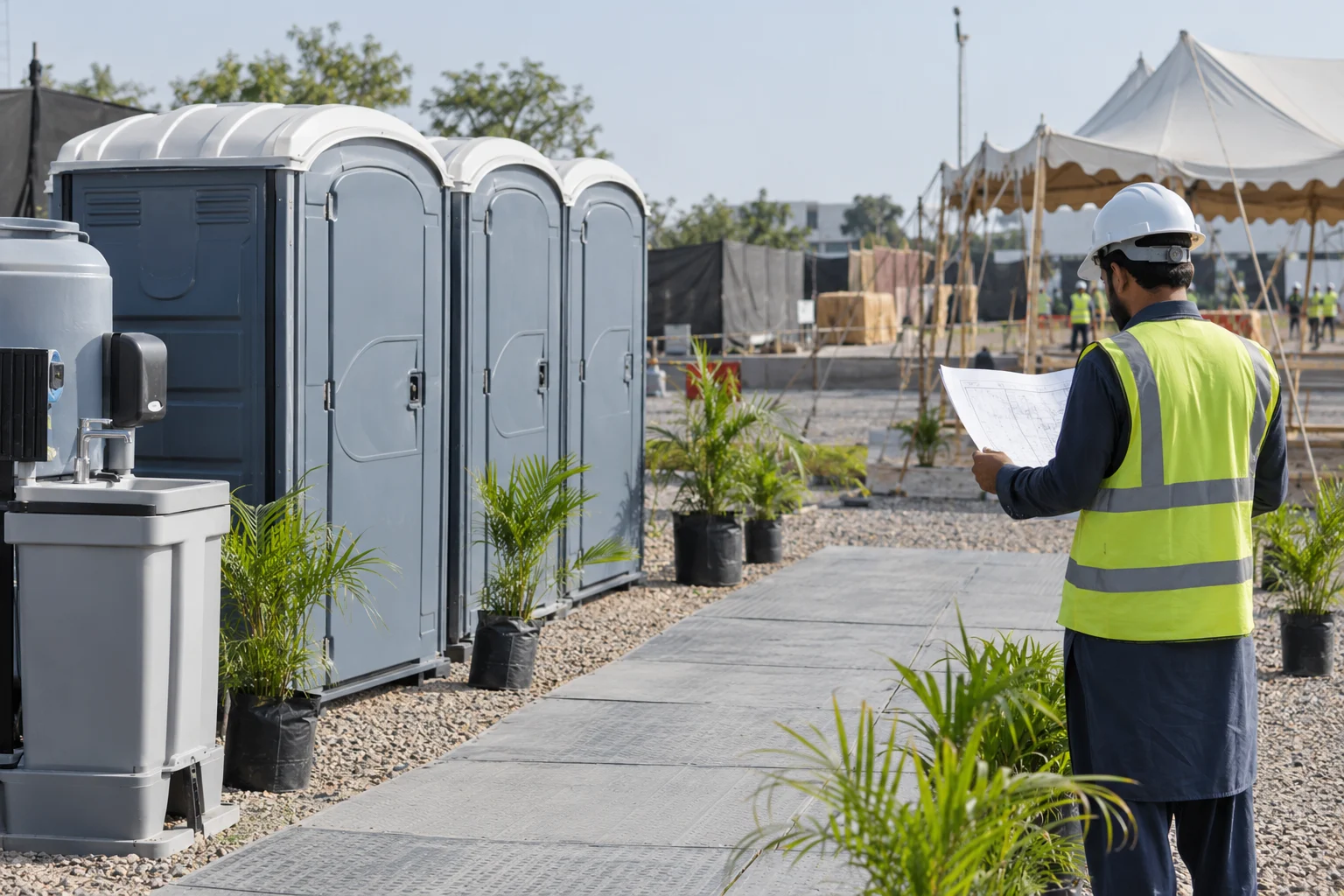
A portable washroom arrangement may need water, waste handling, cleaning access, handwashing provisions or a connection plan depending on the unit and agreed service. Do not assume every model or rental scope works in the same way. Explain what is available at the location and ask the supplier what must be prepared before delivery.
For example, a long-running construction site may have different needs from a one-day outdoor event. A remote location may need a different arrangement from a city plot with nearby services. Make a short list of site utilities, access limitations and the person responsible for coordinating any site-side work.
Plan Hygiene as an Operating Task
Hygiene is not created by delivery alone. It relies on sensible placement, routine attention, a clear reporting contact and realistic expectations about use. Before agreeing a rental, ask what is included, what the site must provide, how issues should be reported and how the arrangement will be reviewed if use changes.
Keep the area around the cabin clear. Provide users with a visible route and avoid placing the unit next to dust-heavy work, waste storage or standing water where possible. If the project has its own health, safety or welfare procedures, include temporary sanitation in those conversations instead of treating it as a separate purchase.
Construction Sites Need a Practical Welfare Layout
On a construction site, a portable washroom works best as part of the welfare and administration plan. It may sit near a site office, but it should not turn the office entrance into a congested waiting area. Consider shift patterns, the walking route from work fronts, visibility at night and the way deliveries or vehicles move through the site.
ARCT’s construction site setup checklist is a useful companion resource because it places sanitation beside access, office space, storage and security. If your project also needs a permanent or purchase-ready option, read the portable washroom cabin guide before deciding whether rental or purchase better fits the project.
Events Need Visitor Experience and Access
For an event, washroom placement affects how guests experience the venue. The facilities should be straightforward to find without becoming the visual centre of the occasion. Think about lighting, privacy, the route from the main activity area and the ability for cleaning or service access without disrupting guests.
Tell the supplier about the event dates, venue rules, expected attendance pattern, access hours and whether the site is a lawn, open plot, marquee area or another temporary venue. The more clearly the physical conditions are described, the more useful the proposed arrangement can be.
Decide Between Rental and Purchase
Rental is usually considered when the requirement has a defined end date, the location may change, or the project does not want to retain and store the unit afterwards. Purchase can make more sense when a business expects repeated use across projects, wants a custom specification, or needs permanent control over maintenance and relocation. Neither option is automatically cheaper or better in every case.
Compare the full operating picture. For a rental, clarify delivery, collection, service responsibilities, damage terms and what happens if the project extends. For a purchase, consider storage between jobs, relocation, cleaning, repairs and the people responsible for managing the asset. If your requirement is closer to a permanent modular washroom, ARCT’s portable washroom buyer guide provides a better starting point than a short-term rental comparison.
Estimate Demand Without Guessing
A useful rental enquiry should describe demand rather than invent an arbitrary unit count. For a construction project, share the workforce pattern, shift arrangement, work areas and whether existing facilities are available. For an event, explain the expected attendance pattern, duration, guest profile and whether alcohol, food service or long queues may affect use. The supplier can then discuss an appropriate configuration using the actual circumstances.
Peak demand matters more than a simple daily total. A site where everyone takes a break at the same time can create a different requirement from a smaller team working staggered shifts. An event with a short arrival window can also place more pressure on facilities than a longer gathering with the same overall attendance. Tell the supplier when the busiest period is expected.
Plan for Different Users
Consider whether separate facilities, accessible access, family use, staff-only areas or privacy screening are relevant. Do not assume one generic arrangement suits every workforce or event. The placement plan should also account for people who may need a shorter, level and well-lit route. Discuss these needs early because they can affect unit selection and the surrounding layout.
Protect Privacy, Lighting and Safe Access
A temporary washroom still needs a sensible approach. Users should not have to cross an active loading path, walk behind machinery or enter a poorly lit corner. At an event, the route should be easy to understand without placing the units directly beside food service or the main gathering space. At a worksite, keep the access route visible enough for safety while preserving privacy around entrances.
Check the area after dark if the site operates at night. Determine who provides lighting around the approach and whether the unit itself requires power. Where the ground is uneven, muddy or exposed to rain, plan a stable walking surface and manage water around the facility. Small layout decisions often affect usability more than decorative features.
Clarify Servicing and Daily Responsibilities
Before the rental begins, write down which tasks belong to the supplier and which belong to the customer or venue team. The agreement may address cleaning visits, consumables, waste handling, access for service personnel, reporting of faults and collection at the end. The exact scope varies, so it should be confirmed rather than assumed.
Nominate one person who can report an issue and approve site access. Keep the service route available when a visit is expected. If the washroom is locked behind a project gate, tell security who is authorised to enter. For events, coordinate servicing with setup, guest and breakdown times so the activity does not conflict with the public programme.
Daily site housekeeping still matters even when periodic servicing is included. Keep waste and stored materials away from the unit, watch for water collecting near the entrance and report damage promptly. Clear responsibility prevents a minor operational issue from becoming a poor experience for every user.
Prepare for Weather and Changing Site Conditions
Pakistan sites can face heat, dust, heavy rain and rapidly changing ground conditions. Discuss ventilation, shade, water availability and the intended operating period when selecting a unit. The surrounding area should be reviewed after rain or site excavation because a position that worked during delivery may later become difficult to reach.
On long projects, revisit the layout as work fronts move. A washroom that was conveniently placed during excavation may become isolated after hoarding, scaffolding or material storage changes. If relocation is required, coordinate it as a planned move: disconnect any services correctly, prepare the new position and keep users informed during the change.
Compare Quotations by Scope, Not Just Price
Two quotations can appear similar while covering different responsibilities. Compare the proposed unit, rental period, delivery area, setup, collection, servicing, consumables, extensions and site prerequisites. Ask whether taxes or additional site-access costs are included where relevant. Do not rely on a headline rate without understanding what it represents.
A clear comparison protects both the project and the supplier. It reduces disputes about cleaning, access, water, waste arrangements or collection timing. If a requirement cannot be confirmed until the supplier reviews the site, mark it as a point for inspection rather than filling the gap with an assumption.
What to Ask Before Signing a Rental Agreement
- What unit type and configuration is proposed for the use case?
- What is included in delivery, placement, servicing and collection?
- What must the customer prepare at the site?
- How should changes in duration or use be communicated?
- What contact should the site use for questions during the rental period?
- What access is required for delivery, servicing and collection?
These questions are more useful than comparing an unclear headline price. They help you compare scopes fairly and identify whether the unit can operate properly at your actual location.
Prepare a Better Enquiry
Include the city, exact site or venue location, proposed dates, intended users, access notes, a contact person and any photos that explain the placement area. Tell the supplier if there are gates, stairs, soft ground, restricted hours or nearby vehicle activity. This information reduces avoidable back-and-forth and makes delivery planning clearer.
AL Rehmat Container Terminal provides modular site solutions across Pakistan from Lahore. For a site-specific conversation about temporary facilities, use the ARCT contact page and share the practical details of the project or event.
Conclusion
Portable toilet rental works best when it is planned as part of the site or event, not added after everything else is arranged. Define the use, prepare the location, clarify water and waste needs, agree the operating responsibilities and give the supplier accurate access information. Those steps support a cleaner, more usable temporary facility for everyone who relies on it.
Frequently Asked Questions
Provide the location, intended dates, expected use, access details, proposed placement area and a site contact. Photos or a simple plan can help explain practical conditions.
Yes, temporary washrooms can support site welfare where permanent facilities are unavailable. Plan a safe pedestrian route, practical placement and the required site-side services before delivery.
Confirm the access route, final position, ground condition, nearby water or waste arrangements where relevant, and the person who will receive the unit on site.
It can be, provided the rental duration, access hours, placement area and service requirements are discussed clearly with the supplier in advance.
It can be part of the same facilities cluster, but the location should keep pedestrian access clear and avoid crowding the office entrance or vehicle routes.