
Service notice (July 2026): Reefer container availability, rental rates, haulage cost, genset support, port timing, and cold chain handling charges vary by lane, commodity, temperature requirement, container size, and equipment condition. Prices and schedules may change without notice. Contact Al Rehmat Container Terminal for a written quotation based on your cargo, route, and required temperature set-point.
When cargo needs a controlled temperature, normal transport is not enough. Fresh fruit, frozen meat, seafood, dairy, pharmaceuticals, beverages, chemicals, and temperature-sensitive industrial goods can lose value quickly if the cold chain breaks. That is why reefer container services Pakistan buyers need more than a truck and a container. They need the right reefer unit, correct temperature setting, pre-trip inspection, genset planning, loading discipline, and reliable route coordination.
Pakistan’s cold chain moves through important trade lanes: farms in Punjab and Sindh, seafood processors in Karachi, dairy plants in Faisalabad and Gujranwala, medicine distributors in Lahore and Islamabad, and export cargo moving toward Karachi Port and Port Qasim. Every handoff matters. A delay, wrong set-point, powered-off reefer, poor door sealing, or unverified machine can damage the shipment.
This guide explains how reefer containers work, what PTI means, which cargo needs refrigerated transport, how to choose 20ft vs 40ft reefers, what to ask before booking, and how Al Rehmat Container Terminal supports cold chain cargo through reefer coordination, inland haulage, genset planning, and shipment monitoring across Pakistan.
What Is a Reefer Container?
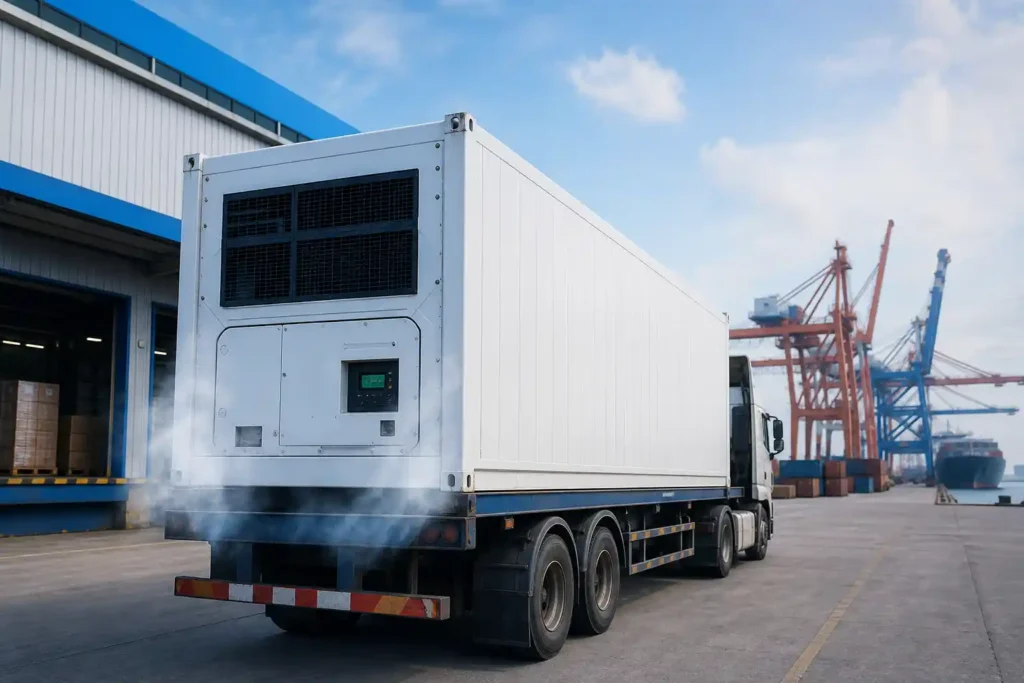
A reefer container is a refrigerated shipping container designed to maintain a controlled internal temperature during storage or transport. It has an insulated body and an integrated refrigeration unit that can cool or maintain temperature based on cargo requirements.
Reefer containers are commonly used for:
- Fresh fruits and vegetables
- Frozen meat and poultry
- Seafood and fish products
- Dairy and beverages
- Pharmaceuticals and vaccines
- Chemicals requiring temperature control
- Chilled processed foods
- Export cargo moving to Karachi port
A reefer container does not automatically solve every cold chain problem. It must be inspected, powered, set correctly, loaded properly, and monitored during movement.
Reefer Container Services Pakistan: What Buyers Actually Need
Most buyers search for a reefer container when they need cold storage or cold transport urgently. But the service is not just equipment rental. A professional reefer container service should include:
- Correct container size selection
- Temperature set-point planning
- Pre-trip inspection, also called PTI
- Genset or power planning
- Container pre-cooling where required
- Loading and sealing coordination
- Inland haulage planning
- Karachi port or warehouse coordination
- Temperature monitoring and exception reporting
- Empty return planning
Al Rehmat Container Terminal supports reefer and shipping needs through its Shipping & Reefer Container Services Pakistan page, with coordination for 20ft and 40ft reefer units, PTI checks, genset planning, and port-to-inland movement.
20ft vs 40ft Reefer Container
The right reefer size depends on cargo volume, weight, route, loading method, and port or warehouse requirements.
| Container Type | Best For | Buyer Notes |
|---|---|---|
| 20ft Reefer Container | Smaller shipments, heavier cargo, limited yard space | Easier to place, useful for dense cargo or smaller cold loads |
| 40ft Reefer Container | Large export loads, frozen food, produce, pharma distribution | More volume, common for long-haul and export lanes |
| 40ft High Cube Reefer | High-volume cartons, lightweight cold cargo | Extra height helps with palletized goods and airflow planning |
A larger container is not always better. Overloading, blocking air channels, or using the wrong pallet layout can reduce cooling performance. Cargo must be loaded with airflow in mind.
What Is PTI for a Reefer Container?
PTI means Pre-Trip Inspection. It is a technical check performed before loading cargo into a reefer container. PTI confirms whether the refrigeration unit is working correctly and whether the container is suitable for the required journey.
A proper PTI may check:
- Refrigeration unit condition
- Temperature control system
- Door gasket condition
- Airflow and evaporator performance
- Drainage channels
- Machine hours and alarms
- Power cable condition
- Container body and floor condition
- Set-point response
Skipping PTI is risky. If a reefer fails after loading, cargo loss can be much higher than the cost of proper inspection.
Temperature Set-Point Planning
Temperature-sensitive cargo must move at the right set-point. The same reefer container may carry different cargo types, but each commodity has its own temperature requirement.
| Cargo Type | Typical Temperature Need | Key Risk |
|---|---|---|
| Fresh fruits and vegetables | Chilled, commodity-specific | Overcooling, dehydration, ripening loss |
| Frozen meat and seafood | Frozen temperature range | Thawing and refreezing damage |
| Dairy products | Stable chilled range | Spoilage from temperature fluctuation |
| Pharmaceuticals | Strict controlled range | Compliance failure and product loss |
| Chemicals | Product-specific range | Stability and safety issues |
Never guess the set-point. Confirm the required temperature from the shipper, manufacturer, export documentation, or product handling instructions.
Why Genset Planning Matters
A reefer container needs power to maintain temperature. During road transport, staging, port waiting, or yard holding, the reefer may require a genset or reliable power source.
Genset planning matters when:
- The cargo moves from inland city to Karachi port
- The reefer waits at a yard before loading
- The shipment requires continuous cooling
- The route has expected delays
- The container is staged before vessel cut-off
- The cargo is pharmaceutical, frozen, or high-value
A reefer sitting powered off can lose temperature quickly, especially in Pakistan’s summer. Professional cold chain planning should define when the reefer is powered, who monitors it, and what happens if a delay occurs.
Cold Chain Logistics Pakistan: Main Cargo Types
Fresh Produce Export
Pakistan exports fruits and vegetables that require careful handling from farm, pack house, inland movement, and port handoff. Mangoes, citrus, vegetables, and other fresh produce can lose quality if airflow, temperature, and timing are not controlled.
For fresh produce, the important checks are:
- Commodity-specific set-point
- Ventilation requirements
- Pre-cooling before loading
- Carton stacking for airflow
- Fast movement toward Karachi port
Frozen Food, Meat, and Seafood
Frozen cargo requires stricter temperature control. Seafood and meat shipments can suffer serious loss if thawing occurs during transport. Karachi seafood processors, cold stores, and export handlers need reliable reefer equipment and documented handoffs.
For frozen cargo, confirm:
- Frozen set-point
- Reefer machine condition
- Door seal quality
- Genset support
- Temperature logging where needed
Pharmaceutical Cold Chain
Pharmaceutical cold chain cargo needs disciplined handling because temperature deviation may make products unusable. Medicines, vaccines, and lab products often require documented temperature control.
For pharma cargo, ask for:
- Documented set-point
- Temperature monitoring
- Clean loading environment
- Quick door-close discipline
- Exception reporting
- Reliable route and power planning
Dairy and Beverage Distribution
Dairy products and beverages move between factories, cold stores, distributors, and retail networks. Lahore, Faisalabad, Gujranwala, Islamabad, and Karachi lanes often require chilled distribution support.
For dairy and beverage cargo, the key is stable temperature and reduced waiting time during loading and unloading.
Karachi Port and Inland Reefer Movement
Karachi Port and Port Qasim are central to Pakistan’s reefer export and import activity. But many shipments originate inland from Lahore, Faisalabad, Multan, Sialkot, Gujranwala, or farms across Punjab and Sindh.
Common reefer lanes include:
- Lahore to Karachi port
- Faisalabad to Karachi port
- Multan to Karachi port
- Karachi seafood plants to port
- Karachi port to inland cold stores
- Lahore to Islamabad chilled distribution
- Faisalabad to Gujranwala dairy movement
For inland movement, route timing, genset availability, loading schedule, and port cut-off coordination are critical. Al Rehmat’s Logistics Transport Pakistan service supports container haulage and project movement across major Pakistani cities.
Reefer Container Booking Checklist
Before booking, collect complete cargo details. A professional provider cannot quote accurately without understanding the product and route.
Send these details:
- Cargo type and commodity name
- Required temperature set-point
- Chilled or frozen requirement
- 20ft or 40ft container preference
- Pickup city and exact loading point
- Destination city, port, or cold store
- Loading date and required delivery date
- Need for genset during transport
- Need for PTI certificate or proof
- Required monitoring or reporting
- Approx cargo weight and pallet count
- Special handling instructions
The more accurate your information, the safer and more realistic the cold chain plan will be.
Common Reefer Mistakes That Damage Cargo
Avoid these mistakes:
- Loading warm cargo into a reefer and expecting the unit to freeze it quickly
- Skipping PTI before loading
- Choosing the wrong temperature set-point
- Blocking internal airflow with poor pallet stacking
- Opening doors too long during loading
- Allowing the reefer to sit powered off
- Not planning genset support
- Ignoring door gasket condition
- Booking too late near vessel cut-off
- Using dry container handling methods for temperature-sensitive cargo
A reefer container maintains temperature. It is not a substitute for proper pre-cooling, correct packing, and disciplined loading.
Reefer Container vs Cold Storage Warehouse
| Option | Best For | Limitations |
|---|---|---|
| Reefer Container | Transport, short-term staging, export/import cargo | Needs power or genset support |
| Cold Storage Warehouse | Longer-term holding and inventory management | Fixed location, may require extra transport |
| Reefer Truck | Smaller chilled distribution loads | Less suitable for containerized export cargo |
| Dry Storage Container | Non-temperature-sensitive cargo | No cooling or temperature control |
For non-temperature-sensitive goods, a standard storage container Pakistan unit may be enough. For cold or frozen cargo, reefer planning is required.
How Reefer Service Cost Is Calculated
Reefer service cost depends on several factors:
- 20ft or 40ft reefer size
- Rental duration or trip duration
- Route distance
- Genset requirement
- Fuel cost
- PTI and inspection requirements
- Port waiting or yard waiting time
- Temperature monitoring needs
- Urgency of booking
- Cargo handling complexity
A low quote may not include genset, waiting time, monitoring, or port coordination. Always ask what is included before confirming.
Why Choose Al Rehmat Container Terminal?
Al Rehmat Container Terminal supports cold chain and reefer container movement for exporters, distributors, processors, and industrial clients across Pakistan. The service combines container knowledge, terminal coordination, inland haulage, and shipment planning.
Our reefer support includes:
- 20ft and 40ft reefer container coordination
- Temperature set-point planning
- PTI and equipment checks
- Genset and power planning
- Karachi port and inland movement support
- Fresh produce, seafood, dairy, pharma, and frozen cargo handling guidance
- Shipment coordination and reporting
For modular and dry storage needs, Al Rehmat also provides complete container and modular services across Pakistan.
Final Recommendation
Reefer container services in Pakistan require careful planning. The right provider should understand temperature control, PTI checks, genset support, cargo loading discipline, port timing, and inland haulage. For cold chain cargo, a small mistake can cause a large loss.
Before booking, confirm the cargo type, set-point, container size, PTI status, genset requirement, pickup and delivery route, loading time, and monitoring needs. Do not choose only the lowest rate. Choose the service plan that protects your cargo from pickup to handover.
Next steps: Contact Al Rehmat Container Terminal with your commodity, required temperature, origin city, destination, loading date, and reefer size requirement for a written quotation.
Frequently Asked Questions About Reefer Container Services
Reefer container services in Pakistan provide refrigerated containers, temperature control, PTI checks, genset planning, and haulage support for perishable or temperature-sensitive cargo such as food, seafood, dairy, pharmaceuticals, and chemicals.
Reefer containers can maintain chilled or frozen temperature ranges depending on equipment capability and cargo requirement. The exact set-point should be confirmed according to the commodity profile.
PTI means Pre-Trip Inspection. It checks whether the reefer unit, temperature control system, door gaskets, drainage, alarms, and power components are working before cargo is loaded.
Yes, if the reefer needs continuous power during road transport, staging, or waiting time. Genset planning is important for frozen, pharma, seafood, and high-value chilled cargo.
Yes. Reefer containers can support pharmaceutical cold chain movement when the correct set-point, monitoring, loading discipline, and documentation process are followed.
Fresh produce, frozen meat, seafood, dairy, beverages, medicines, vaccines, chemicals, and other temperature-sensitive cargo may require reefer container services.
Al Rehmat Container Terminal supports reefer coordination for Karachi port, Port Qasim, inland cold stores, and major city lanes including Lahore, Faisalabad, Multan, Islamabad, and Karachi.
You should share cargo type, temperature set-point, container size, pickup city, destination, loading date, delivery deadline, genset requirement, and monitoring needs.
A reefer container is designed mainly to maintain cargo temperature, not rapidly freeze warm cargo. Many products should be pre-cooled before loading.
You can request reefer support from Al Rehmat Container Terminal for temperature-controlled cargo, PTI checks, genset planning, and inland haulage across Pakistan.